• HOW TO EARN BITCOIN ?

    In fact, just having a Bitcoin address and start earning Satoshis generated in a seamless way on the internet.

  • WHAT IS BITCOIN?

    The Bitcoin (BTC) is an electronic currency that does not have a physical existence (no banknotes, no coins), noaday it is comparable to other currencies like the dollar, euro, yen, etc.

  • SATOSHI NAKAMOTO BITCOIN CREATOR

    Satoshi Nakamoto is the name used by the unknown person or persons who designed bitcoin and created its original reference implementation.

Wall Street May Fall in Love With Blockchain Following The Recent Ethereum Upgrade


Wall Street continues to have a tenuous relationship with Blockchain technology. Large banks have recently made statements both for and against the new technology, with some companies like Bank of America already pursuing patents.

  • Problem with privacy:

Part of the struggle these financial platforms are having with Blockchain technology is the issue of privacy. The key issue for traders is to keep their positions a secret in order to keep other traders and competitors out of the loop. While Blockchain technology provides immutability, it does not provide complete security or anonymity - keys for enterprise level financial adoption.

However, the ZK-Snark, or Zero Knowledge proofs recently being enabled on the Ethereumblockchain following the network’s Byzantium upgrade, represent a new way to have both anonymity and immutability on a single chain. According to Bloomberg:

“Its ability to reshape vital financial market functions like clearing and settlement has always hinged on whether banks can keep customer and proprietary data secret. Zero-knowledge proofs, a theoretical possibility for decades, are now a reality, letting transactions be verified without the need to share any of the underlying data.”


Source: Cointelegraph

Share

7 International Banks Join Forces To Develop Syndicated Loan Market Based On Blockchain


Seven major global banks have partnered with financial technology (fintech) firms R3 and Finastra for the development of the Blockchain technology-based marketplace for syndicated loans, called Fusion LenderComm. Among the banks are BNP Paribas, BNY Mellon, State Street, and ING.

According to Finastra head of product management, corporate and syndicated lending, Ian Morris, they already successfully concluded the first set of pilot runs on the prototype system in August 2017, and plan to conduct more in the coming months.

“More pilots are planned in the coming month. Development sprints continue towards the final objective of go-live next year.”

  • To improve data sharing between banks :

The Fusion LenderComm platform is designed to improve the data sharing activities between agents and lenders, with the ultimate goal of bolstering efficiency and transparency in the syndicated loan market. The system will show real-time credit agreements, position information, accrual balances, and detailed transaction data directly to lenders from agent bank loan servicing platforms like Finastra’s Fusion Banking Loan IQ.

The unalterable system will maintain all transaction history to provide each lender a personal view of deals participated in, and a time-stamped audit record. Among the benefits of the system are reduced operational cost and burden of agent-to-lender administration, and access to accurate information to lenders on demand, to maximize loan portfolios.

The platform will be underpinned by R3’s Blockchain-inspired Corda system and is scheduled to be commercially launched in 2018.

Finastra deputy chief executive officer (CEO), Simon Paris, said that the project has already attracted around 10 percent of the global syndicated lending market, with other players expected to join in the near future.

 “As more participants join, we will quickly gain the critical mass to develop this into the leading marketplace for syndicated lending and loan trading. No more will lenders find themselves an underserved part of the syndicated loan value chain. Where they have struggled with a lack of transparency and speed in accessing critical deal positions, Fusion LenderComm opens up new data plains beyond position reconciliation.”


Source: Cointelegraph

Share

More Autonomous Governance Can Be Assured By Blockchain


The referendum vote for the independence of Catalonia has adversely affected the stock market in Spain as of early October 2017.

Among the affected indexes is the IBEX, which registered a 15-month low. Spanish government bond yields, however, increased by almost 2%.

The uncertainties due to the referendum and its accompanying protests and violence have made locally-focused investors jittery. The good news is the impact of the various events are yet to be felt outside the Iberian Peninsula.

The Catalonia case seemed to trigger various secessionist movements around the world. In the US, there is an ongoing effort by the state of California to separate itself from the federal republic and become an independent country.

These independence movements are being supported by the innovations of the information age. Among them are the advent of the Internet, and the introduction of the cryptocurrencies, particularly Bitcoin, and their underlying Blockchain technology.


  • How new Catalonia could rely on Blockchain to govern itself:

The growing use of the cryptocurrencies could help drive the success of secessionist movements around the world as digital currencies can be used by separatist states to finance their own governments by digitizing public sector processes and systems, including national identity, voting and even healthcare.


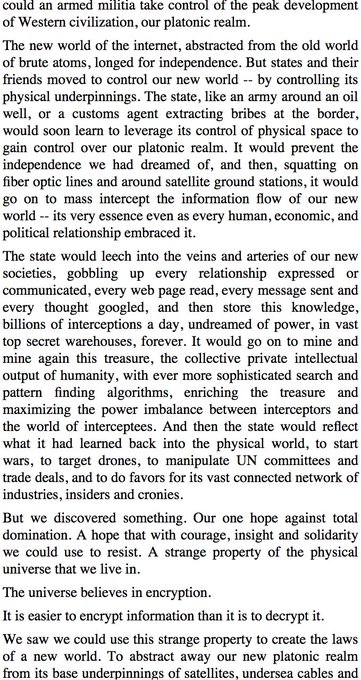
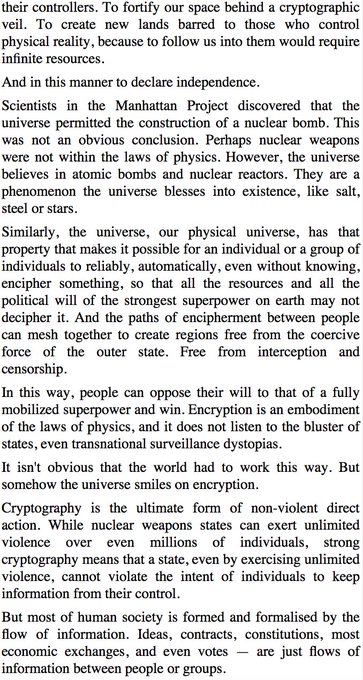
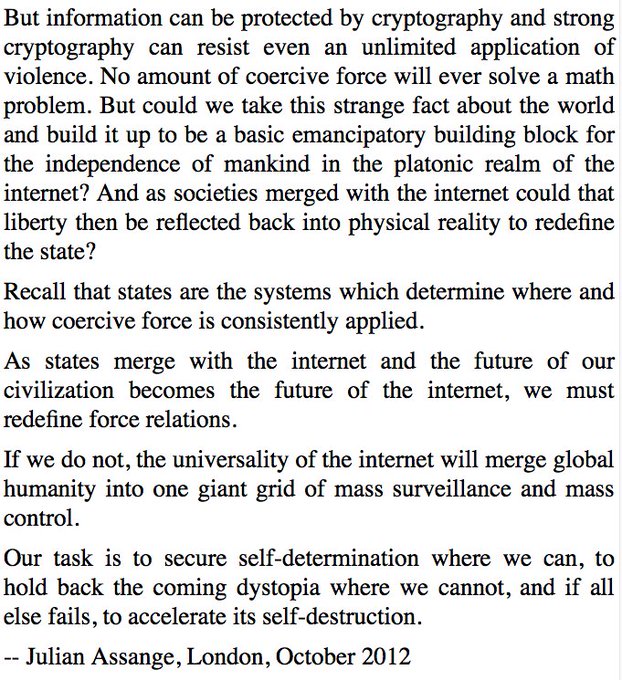
View image on TwitterView image on TwitterView image on TwitterView image on Twitter

Spanish intelligence repression of : What is to be done? 1,559 likes

The rise of the virtual currencies could also be a sign that the long-awaited alternative to the US dollar as the global de-facto currency has already arrived. It remains to be seen, however, if the cryptocurrencies will be adopted by mainstream markets worldwide in the near future.

Meanwhile, in the political arena, right-wing parties are growing in popularity in such countries as France, Austria, Hungary, and the Netherlands. In the US and Great Britain, the political trend is toward division rather than cohesion. Meanwhile, many governments feel threatened by any potential lack of control hence the constant efforts to ban Bitcoin.
These are interesting times, both economically and politically, and there’s no denying how Blockchain helps play a crucial role in changing times ahead.


Source: Cointelegraph

Share

A Byzantium Blockchain Fork For Ethereum On Road


Ethereum's core developers assembled yesterday for a final scheduled meeting before the blockchain network, the world's second-largest by total value, undergoes its next upgrade, expected on October 16.

Held via Google Hangouts at 14:00 UTC, the discussion centered on ensuring all ethereum clients upgrade their software in unison so as to avoid any unintended splits. For the fork to occur across all nodes uniformly, clients need to include the necessary changes that accompany the upgrade – called Byzantium – as well as the trigger at block number 4,370,000 that will mark the official shift to the new code.

Once complete, the hard fork will introduce improvements to ethereum, such as making the network faster with fewer data constraints. Additionally, Byzantium – which constitutes the first of two releases in the wider Metropolis upgrade – will ramify security measures and implement new variables that might pave the way for enhanced privacy on the network.

But while past upgrades have proven more complicated, according to today's discussion, developers expect clients that have yet to release an update expect to do so by next week. Already, the network's most popular client, Go Ethereum (Geth) has published its release.

Further, though the deadline might seem to mark a challenge for client developers, the core development team believes the later release will favor the upgrade by keeping it top of mind.

The meeting did reveal some hiccups, however. For example, there was the realization that some client developers had forgotten to test their software against the lower mining difficulty level that will be introduced in Byzantium.

Still, while no meetings are scheduled between now and the fork, developers left the door open to other conversations – if only in the event of an emergency.

Meeting chairman Hudson Jameson concluded:

"We'll talk at the hard fork if something goes wrong, otherwise, we'll talk on the 20th."


Source: Coindesk

Share

BITCOIN VALUE

Fluid Animation

Popular Posts